
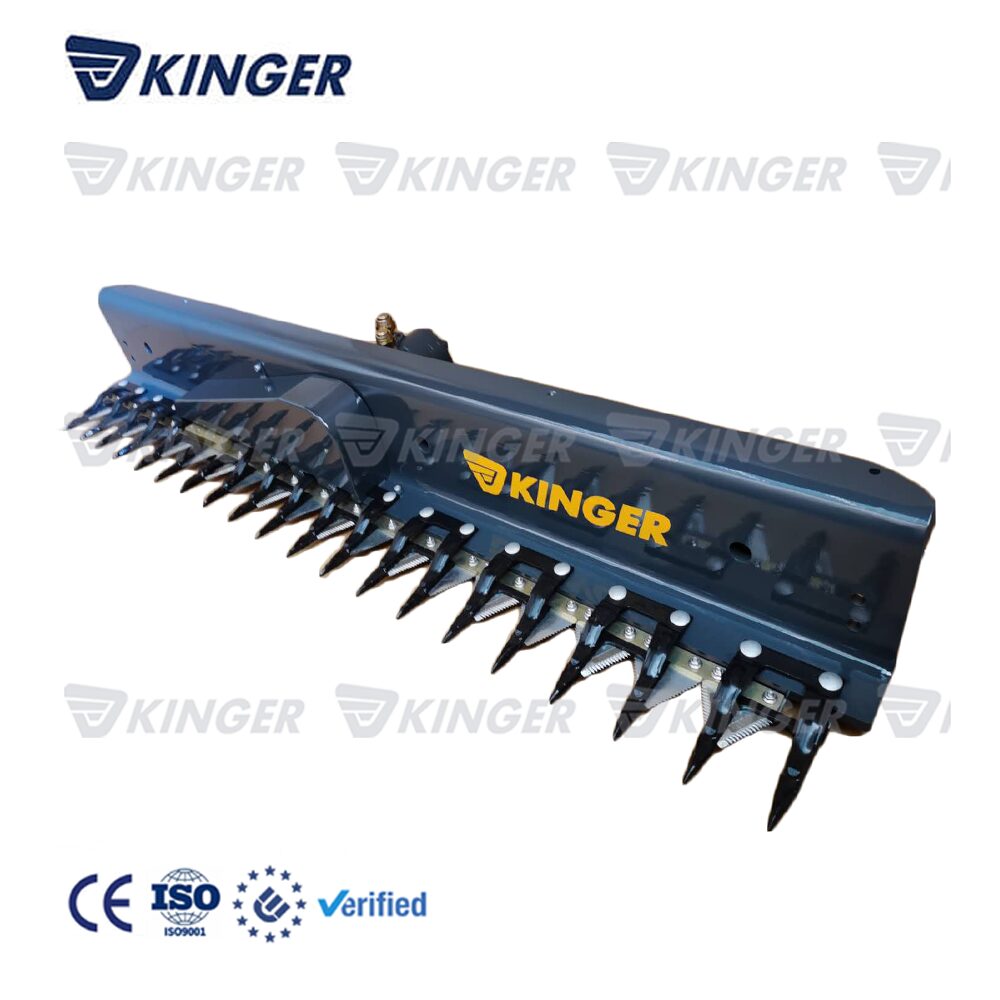
This expert-focused guide provides in‑depth, SEO‑friendly information about
industrial construction machinery wholesale manufacturers and exporters.
It covers core definitions, product categories, technical specifications, quality standards,
logistics considerations, and sourcing strategies suitable for blog, directory, or industry pages.
All content is generalized and does not promote specific brands or companies.
Industrial construction machinery refers to heavy and light mechanical equipment
used in building, infrastructure, mining, roadwork, and industrial plant projects.
Typical machines include excavators, bulldozers, wheel loaders, cranes, concrete equipment,
road rollers, and material handling systems.
Wholesale manufacturers in this sector design, fabricate, assemble, and test
construction machinery and then supply it in bulk quantities to distributors, rental companies,
engineering contractors, and trading houses. They may offer:
Exporters are entities that specialize in cross‑border trade of
industrial construction machinery. These may be:
Together, industrial construction machinery wholesale manufacturers and exporters
form a global supply network that supports large‑scale construction projects,
public infrastructure, and industrial development in emerging and developed markets.
Construction contractors, distributors, and rental companies often prefer to cooperate with
specialized wholesale manufacturers and exporters of industrial construction machinery
due to several strategic advantages.
Wholesale manufacturers and exporters generally structure their product lines
into several core categories. The following overview summarizes the most common types.
Earthmoving equipment is designed for excavation, loading, grading, and
transportation of soil, rock, and aggregates.
These machines move heavy loads vertically and horizontally on construction sites
and in industrial facilities.
Concrete equipment supports the full cycle of mixing, transport, pumping, and placing.
Road construction machinery is optimized for asphalt, aggregates, and soil compaction.
Foundation machines are specialized for deep excavation, piling, and soil reinforcement.
Many construction machinery manufacturers also supply equipment for quarrying and mining.
Light equipment supports finishing operations and smaller job‑site tasks.
The tables below present common specification ranges used by
industrial construction machinery wholesale manufacturers and exporters.
Values are approximate and provided for reference only.
| Machine Type | Operating Weight Range | Engine Power Range | Bucket / Blade Capacity | Typical Applications |
|---|---|---|---|---|
| Crawler Excavator | 10 – 90 t | 70 – 500 kW | 0.3 – 5.0 m³ | General excavation, quarrying, demolition |
| Mini Excavator | 1 – 8 t | 10 – 60 kW | 0.03 – 0.3 m³ | Urban utility works, landscaping |
| Wheel Loader | 5 – 35 t | 60 – 300 kW | 0.8 – 6.0 m³ | Loading aggregates, stockpile management |
| Bulldozer | 10 – 100 t | 80 – 700 kW | 2.0 – 25 m³ (blade) | Land clearing, road building, mining |
| Backhoe Loader | 6 – 10 t | 60 – 120 kW | 0.1 – 1.0 m³ (backhoe) | Utility trenching, small‑scale excavation |
| Machine Type | Max Lifting Capacity | Max Lifting Height | Power Source | Typical Sites |
|---|---|---|---|---|
| Truck Crane | 10 – 300 t | 25 – 90 m | Diesel engine | Infrastructure, industrial plants |
| Tower Crane | 4 – 80 t | 40 – 300 m | Electric | High‑rise and mixed‑use buildings |
| Forklift | 1 – 50 t | 3 – 7 m (std) | Diesel / LPG / Electric | Warehouses, ports, factories |
| Telehandler | 2 – 20 t | 6 – 25 m | Diesel engine | Construction and agriculture |
| Machine Type | Output / Capacity | Engine Power Range | Key Performance Indicator | Typical Application |
|---|---|---|---|---|
| Concrete Batching Plant | 25 – 240 m³/h | 60 – 250 kW (total installed) | Mixing homogeneity, cycle time | Ready‑mix and precast production |
| Transit Mixer Truck | 4 – 14 m³ drum volume | 180 – 300 kW (chassis) | Drum speed, discharge rate | Concrete transport from plant to site |
| Concrete Pump Truck | 80 – 200 m³/h | 200 – 400 kW | Max vertical reach 24 – 70 m | High‑rise, bridge, and tunnel concreting |
| Asphalt Paver | 3 – 12 m paving width | 75 – 200 kW | Paving speed, compaction quality | Highways, urban roads, airport runways |
| Road Roller | 1.5 – 20 t operating weight | 25 – 150 kW | Static and dynamic line load | Soil, gravel, and asphalt compaction |
High‑quality industrial construction machinery manufacturers and exporters
typically align their products with recognized global standards to ensure safety, reliability,
and regulatory compliance across different markets.
ISO 9001 – Quality management systems for consistent production and
traceability across entire manufacturing processes.
ISO 14001 – Environmental management, addressing emissions,
waste handling, and resource efficiency in factories.
ISO 45001 – Occupational health and safety management,
relevant to manufacturing plants and service operations.
Compliance with European Machinery Directive for CE marking
in EU countries, including risk assessments and technical documentation.
Adherence to ANSI and OSHA guidelines
for machines destined for the North American market.
Integration of emergency stop devices, guarding, overload protection,
and ergonomic operator stations as standard safety features.
EU Stage V and US EPA Tier 4 Final
engine emission standards for non‑road mobile machinery.
Compliance with local noise limits and adoption of sound‑dampening designs
for urban construction environments.
Leading wholesale manufacturers of industrial construction machinery rely on
highly integrated and automated production systems. The general workflow includes:
Engineering Design and Simulation – 3D modeling, finite element analysis,
and performance simulations for structural components and hydraulic systems.
Component Fabrication – Cutting, bending, welding, casting, and machining
of booms, chassis, frames, and undercarriages.
Powertrain and Hydraulic Assembly – Installation of engines,
transmissions, pumps, valves, and hydraulic cylinders.
Electrical and Control Systems Integration – Wiring harnesses,
control panels, sensors, and telematics modules.
Painting and Surface Treatment – Corrosion protection, primer coatings,
and final color application in controlled painting lines.
Final Assembly – Fitting cabs, tracks, wheels, attachments, and safety components.
Testing and Quality Inspection – Functional tests, load tests,
leak tests, and performance verification under simulated working conditions.
Wholesale exporters of industrial construction machinery must address complex
logistics, packing, and documentation issues to ensure safe and cost‑effective delivery.
Roll‑on / Roll‑off (Ro‑Ro) shipping for self‑propelled machines
such as excavators on tracks or loader‑type machines with wheels.
Flat‑rack and open‑top containers for oversized components,
booms, and upper structures.
Standard containers for smaller units, attachments,
and spare parts in palletized or crated form.
When sourcing from global wholesale manufacturers and exporters,
construction professionals and distributors should follow a structured evaluation framework.
Many industrial construction machinery wholesale manufacturers provide
OEM (Original Equipment Manufacturer) and ODM (Original Design Manufacturer) services
for distributors and equipment brands.
OEM Services – Manufacturing machines based on the buyer’s brand
and design specifications, including logos, colors, and software interfaces.
ODM Services – Providing complete product design,
with the buyer commercializing machines under its own brand.
These models enable regional distributors to expand their portfolio quickly while relying
on established production capacity and engineering expertise.
The global market for industrial construction machinery is evolving rapidly.
Wholesale manufacturers and exporters are investing in new technologies and
business models to remain competitive.
and temperatures.
MOQs vary depending on the manufacturer and product type.
Some exporters offer single‑unit orders for large machines such as cranes or excavators,
while others set higher MOQs for compact equipment, attachments, or spare parts.
Standard lead times range from 30 to 120 days, including manufacturing and export preparation.
Customized machines or large batches may require longer lead times,
especially if special engines or components must be sourced.
The most common Incoterms include FOB (Free On Board), CIF (Cost, Insurance and Freight),
and CFR (Cost and Freight). Some buyers prefer DAP (Delivered At Place) for
door‑to‑site deliveries when the exporter manages all shipping arrangements.
Industrial construction machinery wholesale manufacturers and exporters play
a crucial role in supplying the equipment that builds infrastructure, factories,
and residential projects worldwide. Understanding machinery categories, technical specifications,
international standards, and export logistics allows buyers, distributors, and contractors
to make informed sourcing decisions and optimize total cost of ownership.
This industry‑level overview is suitable for use on blogs, directory listings,
and specialized construction equipment portals seeking SEO‑friendly,
expert‑oriented content about wholesale construction machinery manufacturing and export.
```
Šioje svetainėje naudojami slapukai, siekiant užtikrinti, kad mūsų svetainėje gautumėte geriausią patirtį.


 English
 Español
 Portugues
 Français
 Italiano
 Nederlands
 Polski
 Română
 Hrvatski



 Whatsapp
 Telefonas
komentuoti
(0)